
Problems These Workflows Solve
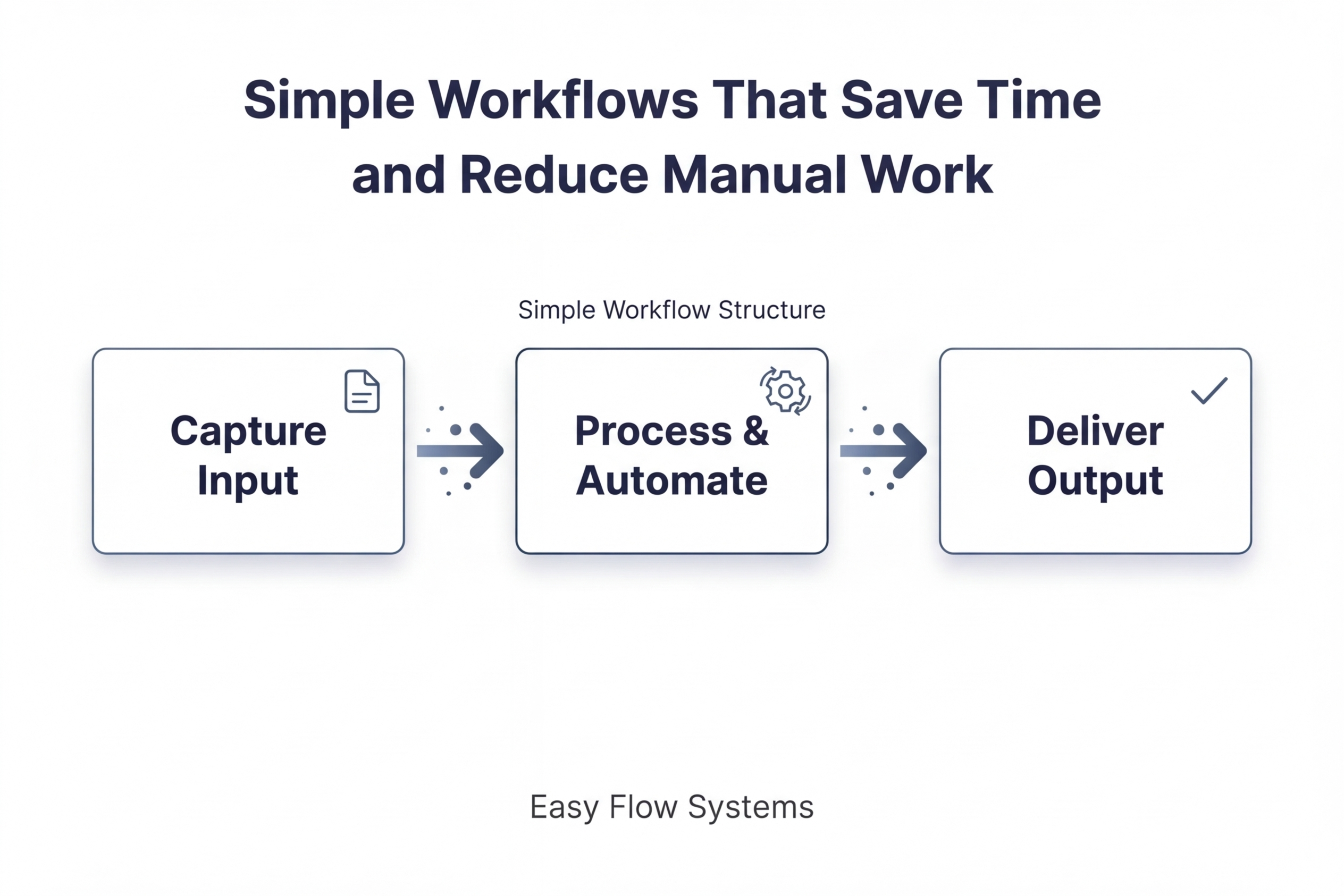
Simple workflows are most useful when they solve real operational problems. This page highlights the common issues these workflows are designed to address — and where to start.
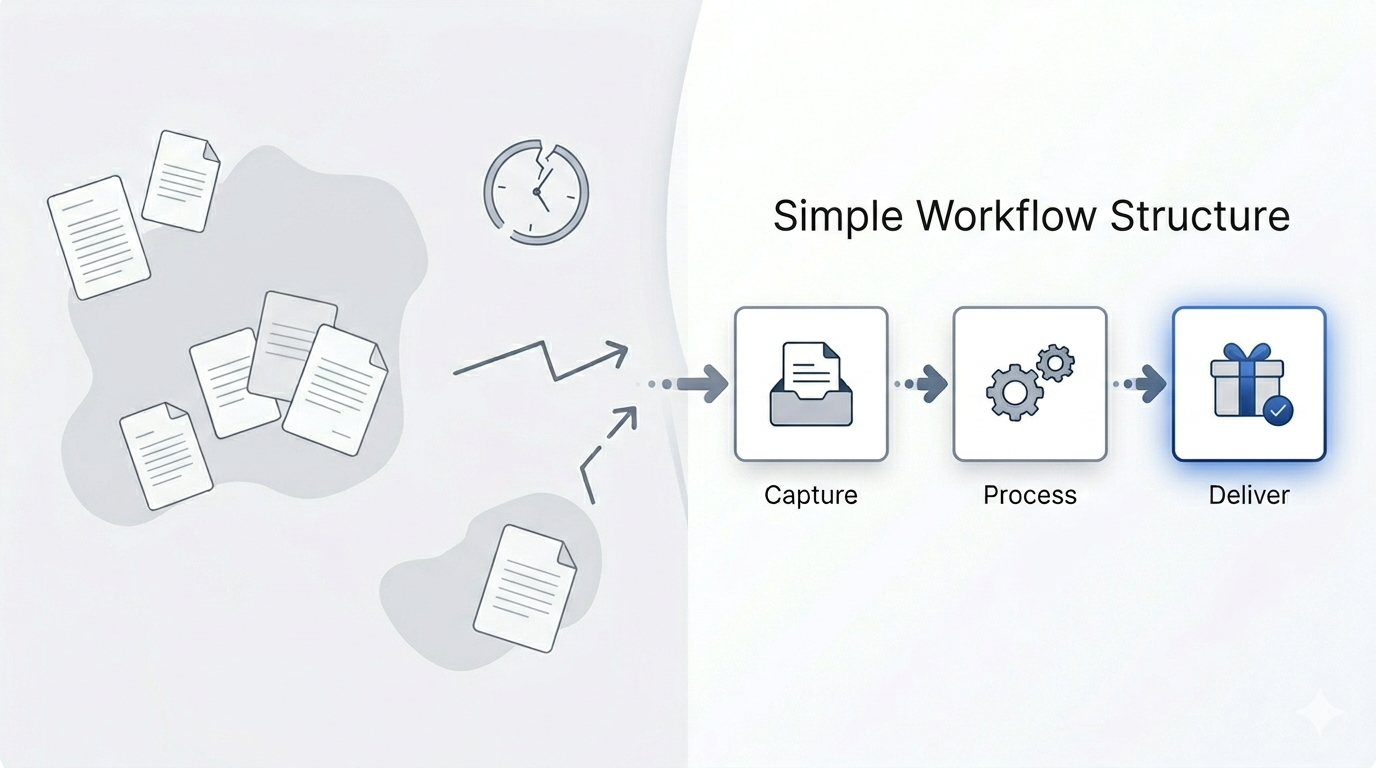
Why Start With the Problem
Most workflow pages focus on features or steps. We start with the problem first.
That makes it easier to understand:
what the issue is
why it slows work down
which workflow helps solve it
which tools support the system
Match the Problem to the Workflow
1. Lead Capture Gaps
Potential leads are missed or not followed up consistently.
Lost inquiries, delayed responses, and missed opportunities.
2. Disconnected Tools
Work breaks down when systems do not connect clearly.
Duplicate data, missed steps, and fragmented workflows.
→ Workflow Coming Soon
3. Scheduling Friction
Booking time requires too many steps and back-and-forth.
Emails, missed appointments, and manual reminders.
4. Too Much Manual Work
Repetitive tasks slow execution and create unnecessary effort.
Manual copying, repeated messages, and duplicate steps.
→ Workflow Coming Soon
5. Slow Content Creation
Unclear processes make content slow and inconsistent.
Too many steps, rewriting, and delayed publishing.
6. Unreliable Processes
Systems work once but fail to repeat consistently.
Too many steps, unclear ownership, and breakdowns.
→ Workflow Coming Soon
Match the Problem to the Workflow
Problem
Start Here
Too much manual work
Disconnected tools
Automation and Integration Workflow
Scheduling friction
Slow content production
Research and data chaos
Data Collection and Research Workflow
Inconsistent processes
Workflow Simplification and Standardization
How These Problems Are Approached
Each workflow is designed to:
reduce manual work
save time
improve consistency
simple To implement without complexity
Tools are shown based on how they function within the workflow — not as standalone recommendations.
Frequently Asked Questions
1. What kinds of problems do these workflows solve?
They solve common operational issues such as repetitive manual work, disconnected tools, slow execution, inconsistent output, and avoidable process friction.
2. Are these problems specific to one industry?
No. These workflows are designed around practical use cases that apply across many business and content environments.
3. Do I need specific tools to solve these problems?
No. Most workflows can be adapted using different tools as long as the core function of the system is maintained.
4. Are these workflows difficult to implement?
No. The focus is on practical systems that are simple, clear, and easy to put into use.
Start With the Problem. Then Build the Workflow.
The fastest way to improve how work gets done is to identify the problem clearly, then use a workflow designed to solve it.
Explore
Legal
© Easy Flow Systems
Easy Flow Systems publishes practical workflows built from real-world use of tools.
Tools are referenced based on their role within workflows — not as standalone recommendations.
This site may contain affiliate links. We may earn a commission at no additional cost to you.
Powered by VAMO Digital Inc.